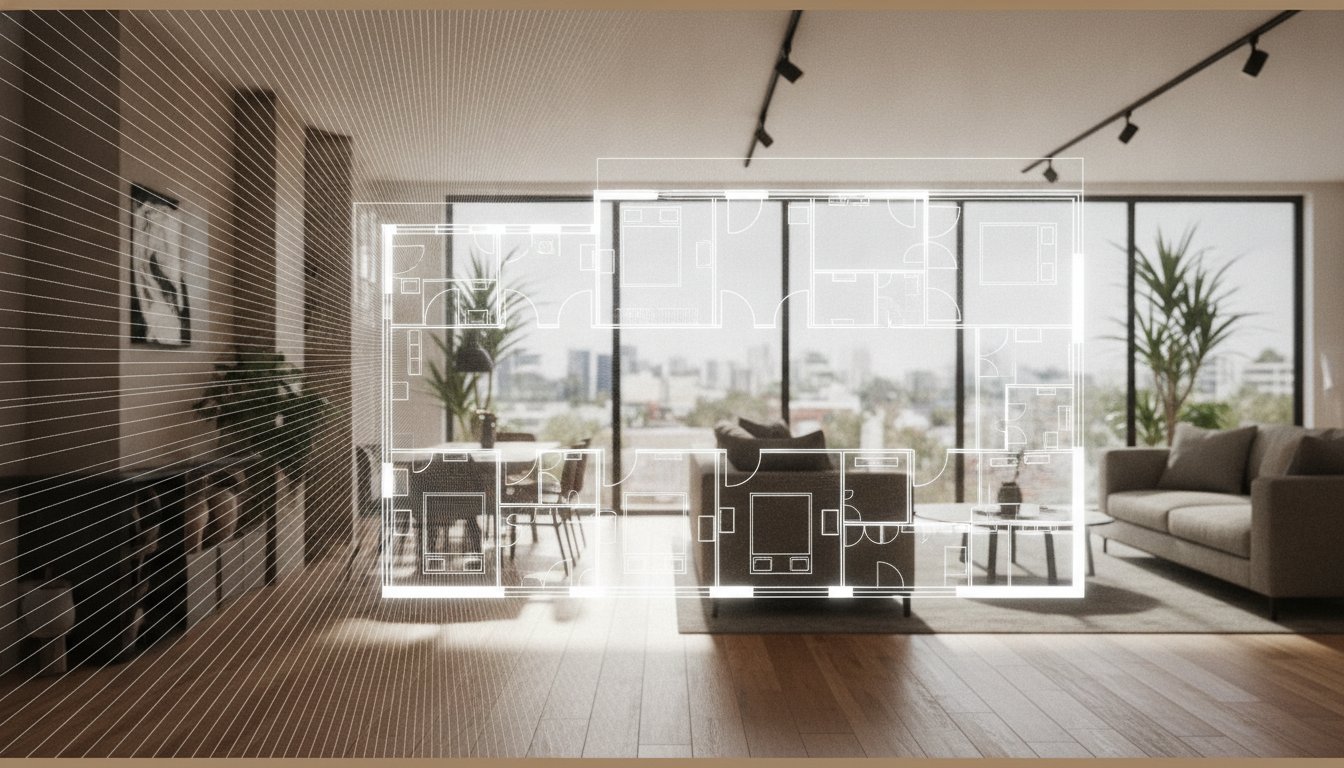
A strategic set of duplex floor plans isn’t just a blueprint; it’s a calculated financial instrument designed to unlock your land's maximum regulatory and market potential. You likely recognise that a generic layout is a risk you can’t afford when construction costs are consistently high across the country, often reaching A$3,800 per square metre. It’s a common frustration: how do you reconcile narrow block constraints with a layout that actually clears council hurdles and delivers a return?
This guide from Dual Living promises to bridge that gap. You’ll learn how to evaluate designs that don't just look good on paper but are engineered to pass town planning applications and command premium prices in a 1.0% vacancy rate market. We will preview the critical shifts in the NCC 2025 standards and detail how to optimise internal space to ensure your investment remains resilient against 2026 interest rates. From site yield analysis to final builder appointment, we are providing the insider's roadmap to high-yield development in the current Australian landscape.
Key Takeaways
- Learn how to balance maximum internal area with council-mandated setbacks to ensure your duplex floor plans are both compliant and highly profitable.
- Discover how to transform site constraints like narrow blocks or corner lots into competitive advantages through clever double-storey configurations and dual street frontages.
- Understand why targeting specific demographics, such as families or professional couples, is critical for achieving superior resale value and rental yield in the 2026 market.
- Find out why a "feasibility first" approach is essential for bridging the gap between an ambitious architectural vision and successful town planning approval.
The Strategy Behind High-Yield Duplex Floor Plans
A strategic approach to duplex floor plans is about precision. You're balancing maximum internal area against strict council-mandated setbacks and site coverage limits. If your layout doesn't respect the local character required for dual occupancy homes, it won't just look out of place; it'll likely be rejected. Success requires a layout tailored to your target demographic. Families need four bedrooms and a second living area. Professional couples prioritise ensuite luxury and home offices. If you design for everyone, you design for no one. This is the secret to achieving a high-end feel without overcapitalising. Focus on volume, light, and flow rather than raw square metreage.
Side-by-Side vs. Tandem Layouts
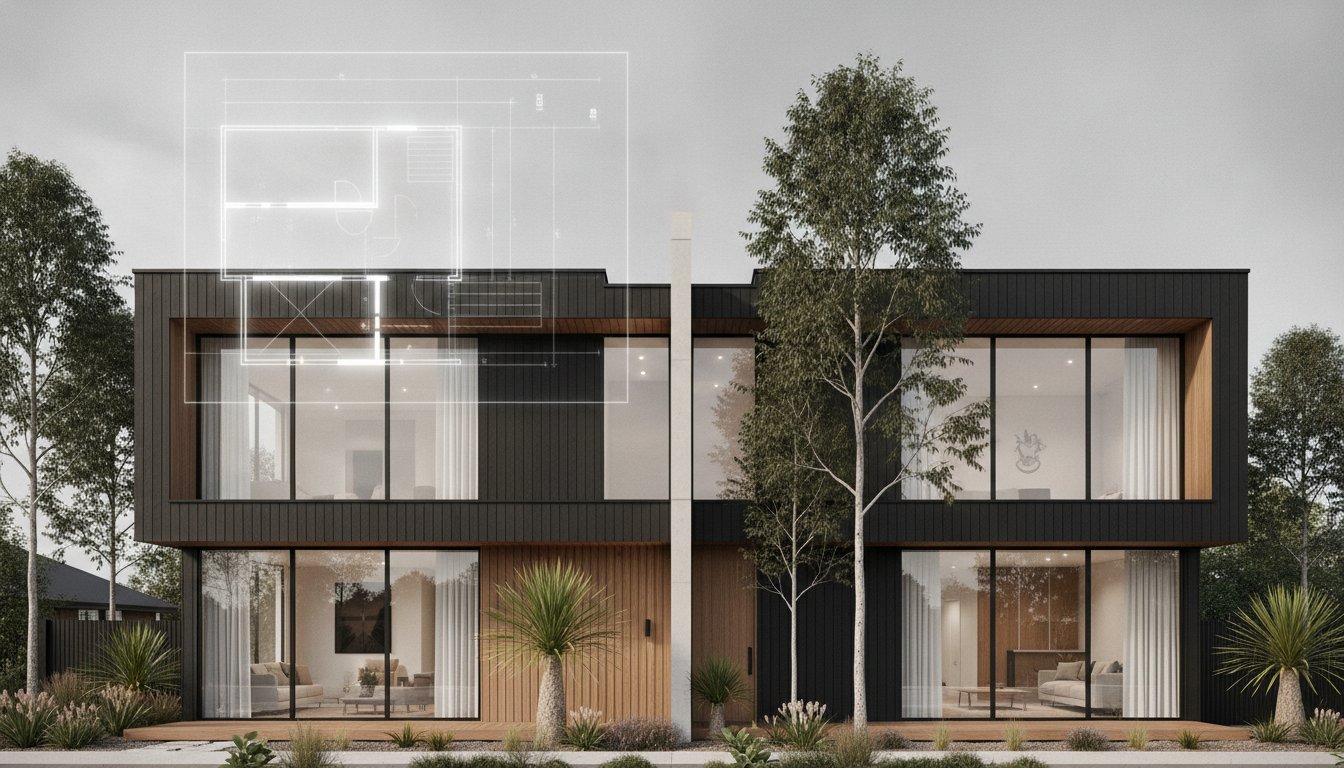
Which configuration wins on ROI? Side-by-side layouts are the gold standard for resale. They offer two equal street frontages, giving each dwelling the appearance of a standalone duplex house plan. This mirror image symmetry typically commands a higher valuation in the Australian market. However, if your block is exceptionally narrow, tandem configurations become your tactical advantage. While one unit sits behind the other, clever design ensures privacy and light. Side-by-side is preferred for resale, but tandem can unlock value on sites others would overlook.
Maximising Site Coverage and Setbacks
Local planning schemes are your boundaries, not your enemies. Pushing site coverage to the limit requires an expert eye for setbacks. Why do off-the-shelf plans fail? They ignore the site-specific constraints that town planning officers scrutinise. A standard plan might work in one suburb but trigger a rejection in the next due to a minor setback discrepancy. You need a design that pushes the boundaries safely, ensuring every centimetre of your land is working for your bottom line. Precision in the planning phase prevents expensive redesigns later. Don't leave your yield to chance by using a generic template that doesn't account for your specific council's requirements.
Designing for Site Constraints: Narrow Blocks and Corner Lots
Narrow blocks demand vertical thinking. You can't spread out, so you must build up. Double-storey duplex floor plans are the industry standard for a reason. They allow for internal light wells that pull natural sun into the centre of long, slim dwellings, preventing that "tunnel" feel. Corner lots offer even more strategic flexibility. You can utilise dual street frontage to create entries on different streets. This removes the shared driveway bottleneck and makes each unit feel like a standalone home. This perceived independence is a major driver for higher valuations and faster resale.
Privacy shouldn't be an afterthought. The "party wall" is a frequent source of tenant complaints and reduced market appeal. Strategic placement of wet areas, staircases, or garages against this common boundary acts as a natural buffer. Acoustic zoning is the deliberate separation of quiet living areas from shared structural boundaries. By isolating noisy zones, you ensure the high-end feel of your development isn't compromised by thin-wall perceptions. As highlighted in LoopNet's Duplex Investing Guide, managing these lifestyle risks is central to securing superior financial returns.
Internal Flow and Spatial Efficiency
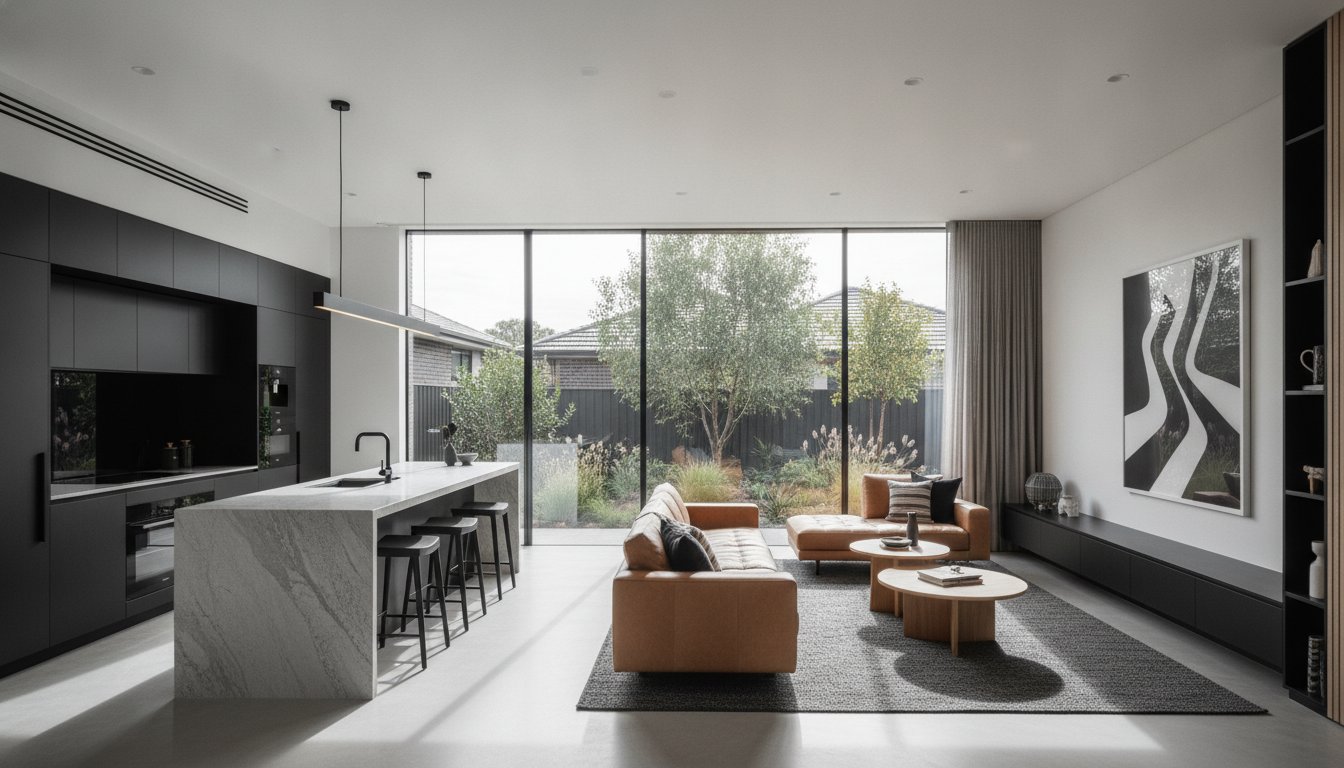
Modern Australian buyers expect a seamless kitchen-to-alfresco flow. It's a non-negotiable. If your layout feels disjointed, you've already lost your premium tenant. Integrate butler’s pantries and extensive built-in joinery to attract owner-occupiers who value storage. Don't forget Private Open Space (POS). While council requirements for POS are often viewed as a hurdle, clever duplex floor plans treat these areas as lifestyle assets that extend the perceived square metreage of the home.
Future-Proofing: Multi-Generational and Coliving Layouts
Market demand is shifting toward flexibility. Designing for the long term means including at least one ground-floor bedroom with a full ensuite. This caters to ageing residents or provides a private retreat for adult children living at home. If your goal is maximum cash flow, integrating coliving principles into your duplex designs can significantly increase your rental yield by allowing you to cater to multiple independent tenants within a single dwelling.
From Conceptual Plans to Town Planning Approval
A beautiful design is worthless if it can't get past council. Before you invest in detailed duplex floor plans, you must check if you can build a duplex on your block. Why waste months on a layout that triggers an immediate rejection? Strategic planning identifies showstoppers like overshadowing or overlooking early in the design phase. By vetting your architectural vision against town planning reality, Dual Living ensures your project moves from concept to permit without costly redesigns. Is your plan tender-ready? It needs to be to secure the best price during your builder appointment.
The Town Planning Application Lifecycle
Success at council requires more than just submitting drawings. You need a robust design response that justifies your floor plan choices to planners. Expect a Request for Further Information (RFI). This is where many amateur developments stall. A savvy consultant manages these RFI stages by providing technical evidence that maintains your design integrity while satisfying regulatory requirements. It's about negotiation, not just submission.
Optimising for Construction Cost
Smart designs reduce builder margins. By standardising structural spans and material choices within your duplex floor plans, you eliminate the "complexity tax" builders often apply to custom projects. High-end architectural outcomes don't require bespoke structural engineering at every turn. Focus on these efficiencies:
- Aligning wet areas to simplify plumbing stacks.
- Using standard window sizes to avoid custom fabrication costs.
- Minimising expensive steel beam requirements through clever load-bearing wall placement.
This pragmatic approach ensures your build remains profitable without sacrificing aesthetic appeal. You aren't just building a home; you're managing an asset. Every structural decision should be a trade-off between visual impact and construction efficiency.
Securing Your Development Success in 2026
Success in the 2026 property market requires more than just a standard set of drawings. It demands a sophisticated understanding of how duplex floor plans influence every stage of the development lifecycle, from town planning approval to final resale. You've seen how side-by-side layouts can drive valuations and how acoustic zoning protects your investment's long-term appeal. By prioritising buildability and site-specific constraints, you move beyond "pretty plans" and into the realm of high-yield asset creation. A well-executed design doesn't just fill space; it generates wealth by respecting council requirements while meeting the lifestyle demands of the Australian market.
Navigating this process alone is a significant financial risk. Dual Living provides the end-to-end development consultancy you need to bridge the gap between vision and reality. With our expert town planning navigation and independent builder appointment strategy, we ensure your project is optimised for both yield and construction efficiency. Maximise your site’s potential with a strategic duplex feasibility assessment from Dual Living. Your land is a high-value asset. It's time to treat it like one and build with confidence.
Frequently Asked Questions
What is the minimum land size required for a duplex floor plan in Australia?
Minimum land requirements vary significantly across Australian local government areas. In many Sydney and Melbourne councils, you'll typically need between 500 and 600 square metres; however, specific zoning reforms like the NSW Low and Mid Rise Housing Policy are increasingly allowing dual occupancy on smaller lots. Always verify your site's specific zoning and frontage requirements before commissioning duplex floor plans to ensure the design is actually permissible.
Can I build a side-by-side duplex on a narrow block?
You can build a side-by-side duplex on a narrow block provided you meet the minimum frontage requirements of your local planning scheme. Most councils require a frontage of at least 12 to 15 metres to accommodate two garages and separate entries comfortably. If your frontage is tighter than this, a tandem (front-to-back) layout is often the more feasible tactical solution to secure town planning approval without compromising on internal space.
How much does it cost to get custom duplex floor plans designed?
The cost for custom design services depends on the complexity of the site and the level of town planning involvement required. Rather than looking for the cheapest entry point, focus on the value of a plan that is "tender-ready" and compliant with the latest National Construction Code (NCC) 2025 standards. Investing in high-quality duplex floor plans early reduces the risk of expensive redesigns and builder variations during the construction phase.
Is it better to have a single-storey or double-storey duplex floor plan for investment?
Double-storey designs generally offer a superior return on investment by maximising site yield and internal floor area. While single-storey layouts are cheaper to build, they often struggle to provide the four-bedroom, two-living-area configuration that modern Australian families demand. A two-storey approach allows you to maintain essential Private Open Space (POS) while delivering the high-end feel necessary for premium rental yields or resale values.