The lowest quote on your desk is almost certainly the most expensive mistake you'll ever make. In a market where Australian building regulations are tightening and material costs remain high, the 'cheapest' option often hides a mountain of variations. You're already feeling the pressure of dual occupancy development: the town planning hurdles, the lack of transparency in quotes, and the constant fear of a budget blowout that erases your profit. Learning how to choose a duplex builder isn't about finding a name on a signpost. It's about implementing a rigorous, strategic selection framework that forces every contractor to reveal their true costs before you sign.
This guide will show you how to master the professional tender process to protect your margins and ensure a seamless transition from design to construction. You'll learn how to move beyond basic vetting to secure a fixed-price contract with a reliable partner who respects your timeline. From navigating the 2026 energy efficiency standards to managing subcontractor disclosures, this framework provides the tactical advantage you need to maximise the ROI on your project. It's time to stop guessing and start appointing with professional confidence.
Key Takeaways
- Protect your development margins by identifying the "variation trap" common in standard volume builder quotes.
- Master a 4-step tender framework that moves beyond basic floor plans to force transparency in every contractor submission.
- Learn how to choose a duplex builder based on a proven track record in dual occupancy rather than just the lowest headline price.
- Discover how independent builder appointment can uncover significant hidden costs-up to A$45,000-before you commit to a contract.
- Ensure a seamless transition from town planning to construction by aligning your project with a specialist builder who understands complex duplex designs.
Why Your Choice of Duplex Builder Determines Your Project's ROI
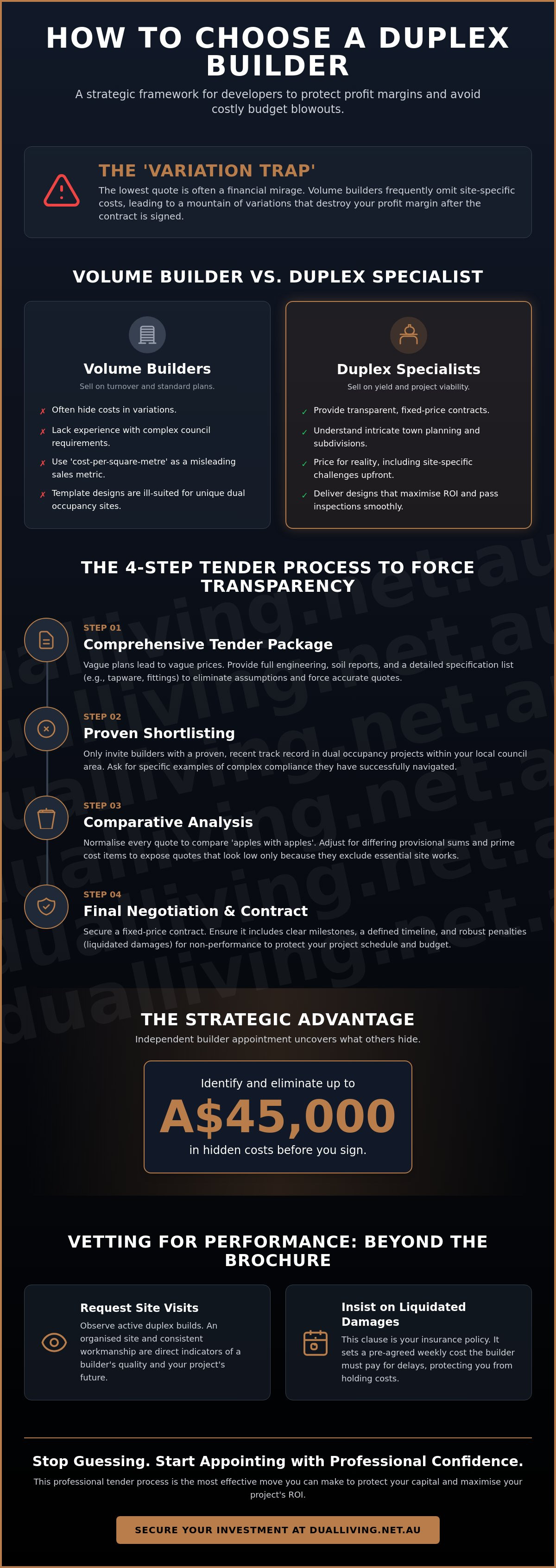
A duplex is not just a residential project. It is a high-yield investment vehicle. The builder you select acts as the primary custodian of your profit margin. If you get this choice wrong, a projected 20 per cent return can quickly evaporate into a 5 per cent break-even headache. Most developers start by looking at the headline price, but the cheapest quote is often a financial mirage. A standard duplex building requires specific site adjustments that volume builders aren't equipped to handle without charging a premium later.
The "variation trap" is the most common killer of development margins. Volume builders thrive on "standard" plans, but dual occupancy sites are rarely standard. They come with slope issues, easement restrictions, and unique council requirements. When a builder realises your site doesn't fit their template, the variations start rolling in. These aren't small costs. They are structural hits to your bottom line. Understanding how to choose a duplex builder involves looking past the marketing brochures to find a partner who prices for reality, not just the contract signature.
Specialisation is your best defence. A residential builder might build fifty houses a year, but if they don't specialise in dual occupancy, they won't understand the intricate town planning nuances required for a successful subdivision. Independent builder appointment is the only way to ensure an unbiased selection. It removes the emotional sales pitch and replaces it with a cold, hard analysis of capabilities and contract transparency.
Custom vs. Volume Builders: Which Strategy Wins?
The cost-per-square-metre myth is a dangerous metric in duplex development. It's a seductive number that often ignores site-specific costs like drainage, retaining walls, or upgraded fire separation. Volume builders sell on turnover; custom specialists sell on yield. While a custom builder may appear more expensive upfront, they account for site-specific design requirements that volume builders miss. When you evaluate how to choose a duplex builder, check their history with local council requirements. You need a partner who has a documented track record of delivering projects that pass final inspections without costly, last-minute retrofits.
The 4-Step Tender Process: How to Vet and Appoint the Right Partner
Finding a builder isn't the challenge; finding the right builder is. A structured tender process removes the guesswork and replaces it with data. If you want to know how to choose a duplex builder who won't compromise your profit, you must move beyond the handshake and into a rigorous extraction of information. Professional developers don't rely on luck; they rely on a framework that forces transparency.
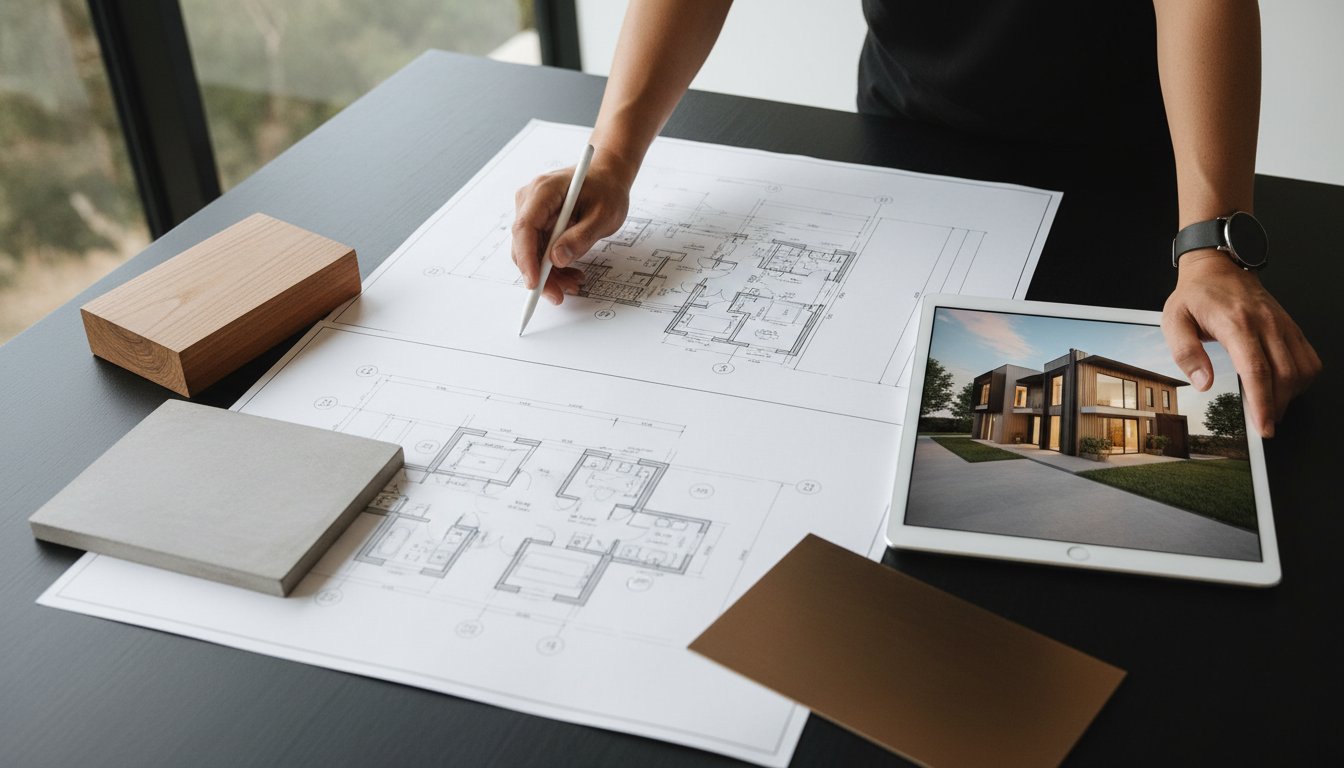
- Step 1: The Comprehensive Tender Package. Include full engineering, soil reports, and a detailed specification list. Vague plans lead to vague prices. If you don't define the tapware, the builder will quote the cheapest option, leading to a variation later.
- Step 2: Proven Shortlisting. When deciding how to choose a duplex builder, only invite those with recent completions in dual occupancy. Ask for specific examples of projects that required complex town planning compliance in your local council area.
- Step 3: Comparative Analysis. Normalise the quotes. Adjust for differing provisional sums and prime cost items so you are comparing 'apples with apples'. One quote might look low because it excludes essential site works.
- Step 4: Final Negotiation. Fix the price and the timeline. Ensure the contract includes clear milestones and penalties for non-performance.
This process is about leverage. When builders know they are in a competitive, transparent environment, their pricing becomes sharper and more honest. For many landowners, managing this level of detail is overwhelming, which is why a professional builder appointment service is often the most cost-effective move you can make to protect your capital.
Vetting for Performance: Beyond the Portfolio
Glossy photos in a brochure mean nothing. You need to see the "bones" of a project. Request site visits to active duplex builds. Observe the site management: Is it organised? Is the workmanship consistent behind the plaster? A builder's current project is a window into your future development. If the site is a mess, your budget likely will be too.
The 'Liquidated Damages' clause is your ultimate insurance policy. It sets a pre-determined weekly cost the builder must pay you if they exceed the agreed completion date. This covers your ongoing interest and holding costs. During the interview stage, test their problem-solving. Ask how they managed a recent material shortage or a site delay. Their answer will tell you more about their reliability than any testimonial ever could.
Case Study: The Strategic Advantage of Independent Appointment
Consider a landowner with a DA-approved site. They initially approached three builders solo. The quotes varied by A$120,000. Why? One builder included comprehensive site costs; another buried them in "provisional sums" that would inevitably blow out. Without a professional eye, the landowner was ready to sign the lowest headline offer. By switching to a managed consultancy approach, we applied a strategic lens to the selection process.
The tender process didn't just compare prices. It audited the fine print. We identified A$45,000 in hidden costs, ranging from inadequate drainage allowances to missing fire-rated party wall specifications. By resolving these before the contract was signed, we secured a fixed-price agreement. This protected the project's projected 20 per cent profit margin from the usual mid-build erosion. Understanding how to choose a duplex builder means recognising that the best price is the one that doesn't change after the slab is poured.
Why Dual Living's Approach Eliminates Bias
Objectivity is our primary asset. We don't take "kickbacks" or referral fees from builders. This independence ensures our advice remains focused on your ROI, not a commission. We leverage an extensive network to find the specific builder whose current workflow and expertise match your project's unique requirements. This removes the risk of appointing a builder who is over-leveraged or ill-equipped for dual occupancy complexities.
Success in development is about continuity. It involves moving from a strategic guide to dual occupancy homes to the practical reality of a construction site. Our role is to bridge the gap between town planning approval and the final handover. When you know how to choose a duplex builder through an independent framework, you aren't just hiring a contractor. You're appointing a partner who is contractually obligated to deliver on your financial vision without the standard industry "surprises."
Take Control of Your Development Yield
The difference between a successful dual occupancy and a financial burden lies in the execution of your tender. You've seen how a structured process can uncover A$45,000 in hidden costs before a single brick is laid. By moving beyond headline prices and focusing on a specialised selection framework, you protect your 20 per cent margin and ensure your project stays on track. Understanding how to choose a duplex builder is the most critical strategic decision you'll make in the development lifecycle.
Don't leave your capital to chance. As an independent consultancy with no builder bias, we've managed over A$250 million in residential developments. We specialise in high-yield dual occupancy and coliving projects, ensuring every contract is a fixed-price shield for your investment. Secure your project's ROI-book a consultation with our builder appointment experts today.
Your path to a high-performing duplex starts with professional transparency. Take the next step toward a seamless, profitable build today.
Frequently Asked Questions
What is the difference between a duplex builder and a standard home builder?
A specialised duplex builder manages the technical complexities of fire separation and party wall construction that standard home builders often overlook. While volume builders focus on repeating a single-dwelling template, a dual occupancy specialist understands the specific council requirements for shared services and mirrored designs. This expertise ensures your project meets the 2026 building codes and energy standards without requiring costly structural modifications mid-build.
How long does the builder appointment process typically take?
You should allow four to eight weeks for a comprehensive builder appointment process. This timeframe covers the initial tender invitation, site visits, and the detailed comparative analysis of the submitted quotes. Rushing this stage often leads to overlooked variations. A strategic approach ensures you have sufficient time to vet subcontractor disclosures and negotiate a fixed-price contract that protects your development margins.
Can I use my own plans with a duplex builder?
Yes, you can use your own plans, provided they are sufficiently detailed for a professional tender. Many developers bring their own designs from an independent architect to maintain control over the project vision. When deciding how to choose a duplex builder for your specific plans, ensure they have a history of translating custom designs into cost-effective construction without sacrificing the quality of the building envelope.
What are the red flags to look for during a builder tender?
A quote that sits significantly lower than the market average is the most dangerous red flag. This usually indicates a "variation trap" where essential site works or finishes are excluded to keep the headline price low. Other warning signs include vague provisional sums, a refusal to commit to liquidated damages, or a lack of transparency regarding subcontractor use. Knowing how to choose a duplex builder requires identifying these gaps during the comparative analysis stage.