Why settle for a 4% rental yield when 15% is the new benchmark for high-performance assets? Traditional residential investment is increasingly a game of diminishing returns. You've likely felt the frustration of inconsistent cash flow or the headache of complex town planning requirements that stall your progress. It's a common trap; the old model of "set and forget" property investment is failing. A strategic coliving development changes the equation by prioritising density and resident experience to maximise your land's potential.
This resource provides the roadmap to mastering the end-to-end development lifecycle through professional consultancy. You'll learn how to navigate regulatory complexity, appoint the right builder, and secure a future-proofed asset that outperforms standard residential builds. We'll break down the financial logic of the $13 billion global coliving market and show you exactly how to design for yield rather than just floor space.
Key Takeaways
- Understand why density is the primary driver of residential ROI in 2026, offering a high-yield alternative to traditional low-growth rental models.
- Master the end-to-end coliving development lifecycle to ensure your project moves from concept to completion with maximum efficiency and minimal risk.
- Learn to navigate the complexities of a town planning application by using custom architectural designs that prioritise both compliance and resident experience.
- Discover the strategic value of independent builder appointment and why avoiding "off-the-shelf" packages is critical for site-specific success.
- Future-proof your property portfolio by identifying how professional consultancy manages regulatory shifts and volatile construction market conditions.
The Investment Case for Coliving Development: Yield vs. Traditional Residential
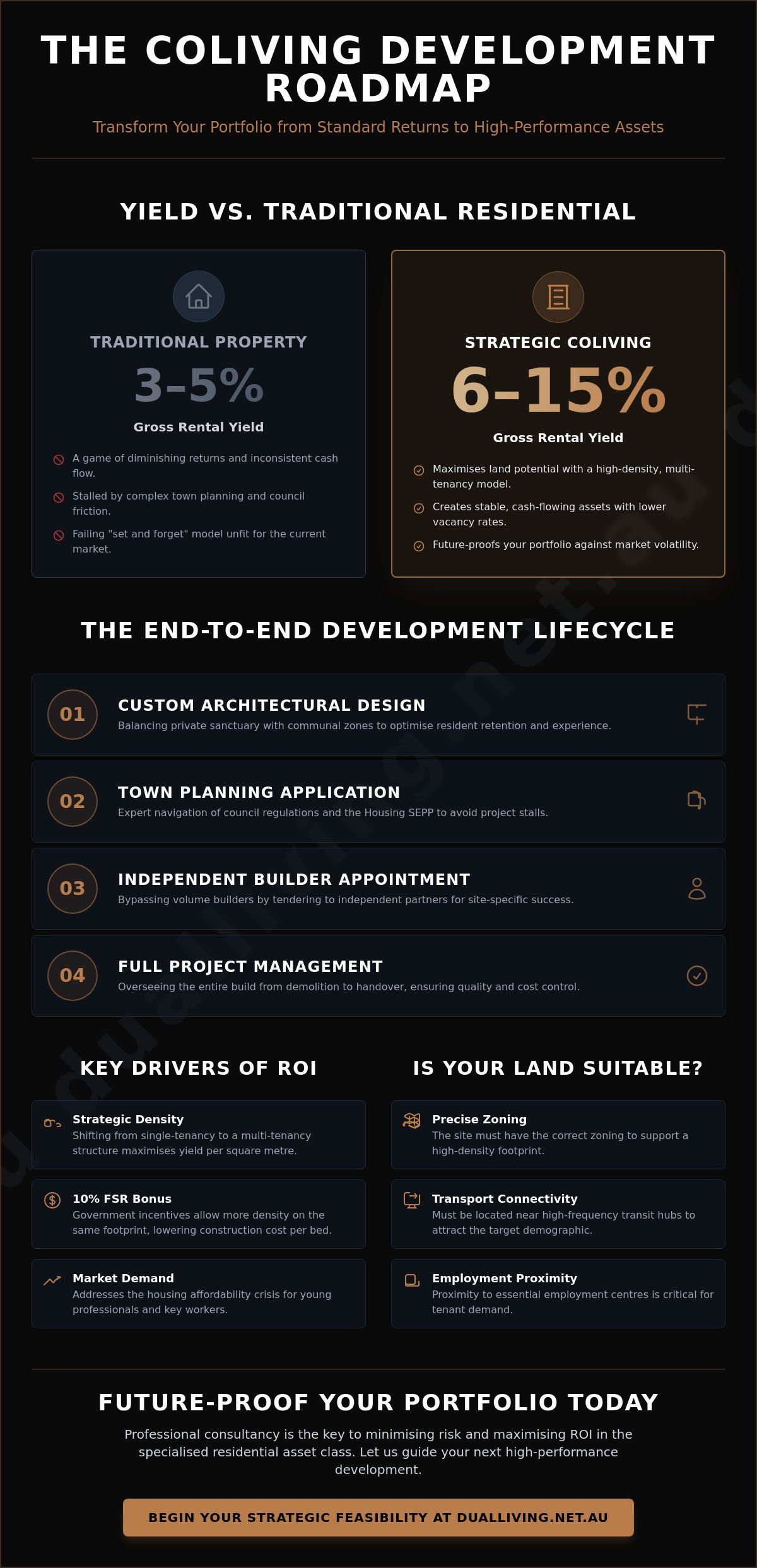
Density isn't just a buzzword; it's the primary engine of ROI in 2026. While traditional residential properties often struggle with yields between 3% and 5%, a strategic coliving development unlocks gross rental yields ranging from 6% to 15%. The logic is simple. You're shifting from a single-tenancy model to a high-density, multi-tenancy structure that maximises every square metre of your land. This isn't about cramming more people into a space. It's about a sophisticated approach to what is coliving in a modern, professional context.
Investors are increasingly turning to this model to combat the "loneliness epidemic" and the housing affordability crisis. By designing for community, you don't just fill rooms; you reduce vacancy rates. Residents stay longer when they feel connected to their neighbours and their environment. This turns a property into a stable, cash-flowing asset that outperforms standard builds in both yield and capital growth. Specialised residential assets are no longer niche; they're the new standard for serious portfolios.
Defining Coliving: Market-Rate vs. Affordable Housing
There's often confusion between boarding houses managed by Community Housing Providers (CHPs) and market-rate coliving. We focus on the latter. This is high-quality, purpose-built housing designed for young professionals and key workers who value lifestyle and location. A major game-changer is the 10% floor space ratio (FSR) bonus available in several Australian jurisdictions. This incentive allows you to build more density on the same footprint, significantly lowering your construction cost per bed compared to traditional multifamily units.
Strategic Feasibility: Is Your Land Suitable?
Not every block is a candidate for this model. Success depends on precise zoning and connectivity. Your site must be near transport hubs and employment centres to attract the target demographic. In the current Australian regulatory landscape, a viable coliving project typically requires a minimum site area that accommodates the 10% FSR bonus while maintaining proximity to high-frequency transit and essential employment hubs. We evaluate site dimensions and local planning overlays to ensure your land can support a high-density footprint before you submit a town planning application. Professional consultancy ensures your coliving development is positioned for maximum capital growth from day one.
Navigating the Coliving Development Lifecycle: A Strategic Roadmap
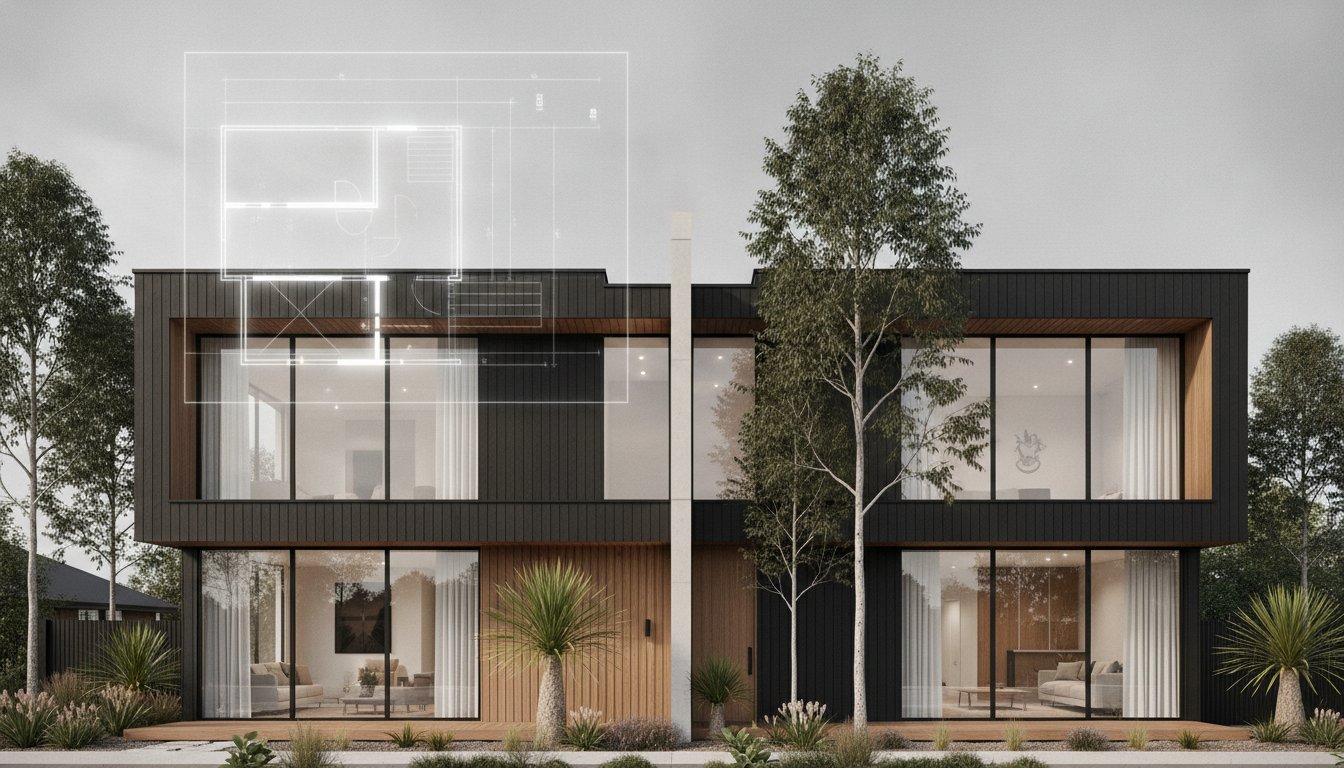
A successful coliving development isn't a "set and forget" project. It requires a rigorous, four-phase framework to move from a vacant block to a high-yield asset. Phase 1 focuses on custom architectural design. Unlike standard homes, coliving requires specific spatial logic to balance communal living with private sanctuary. Phase 2 involves securing your town planning application. This is where many projects stall due to council friction or non-compliance with the Housing SEPP. Phase 3 shifts to builder appointment. We bypass the volume builder trap by tendering to independent partners who understand high-density specifications. Finally, Phase 4 covers the full project management lifecycle from demolition to final handover, ensuring the build matches the strategic vision without cost blowouts.
Designing for Density and Privacy
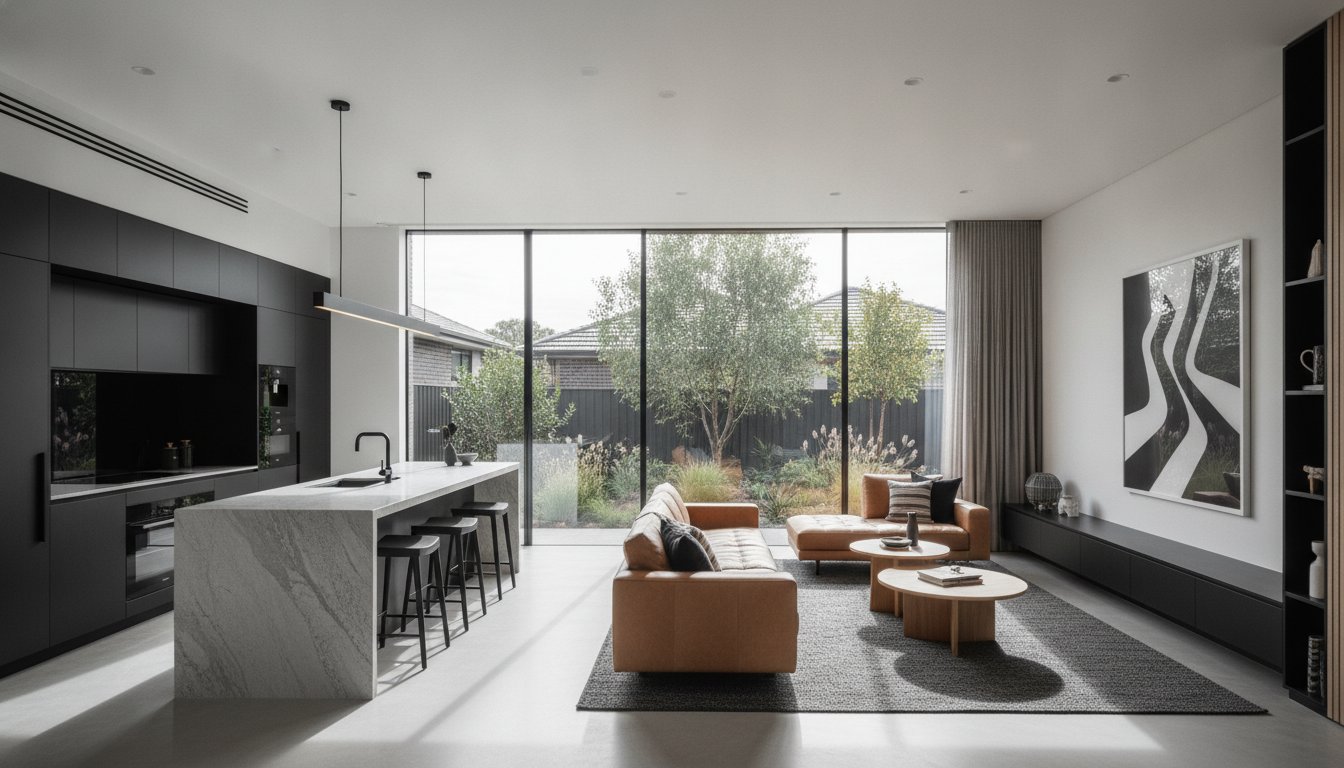
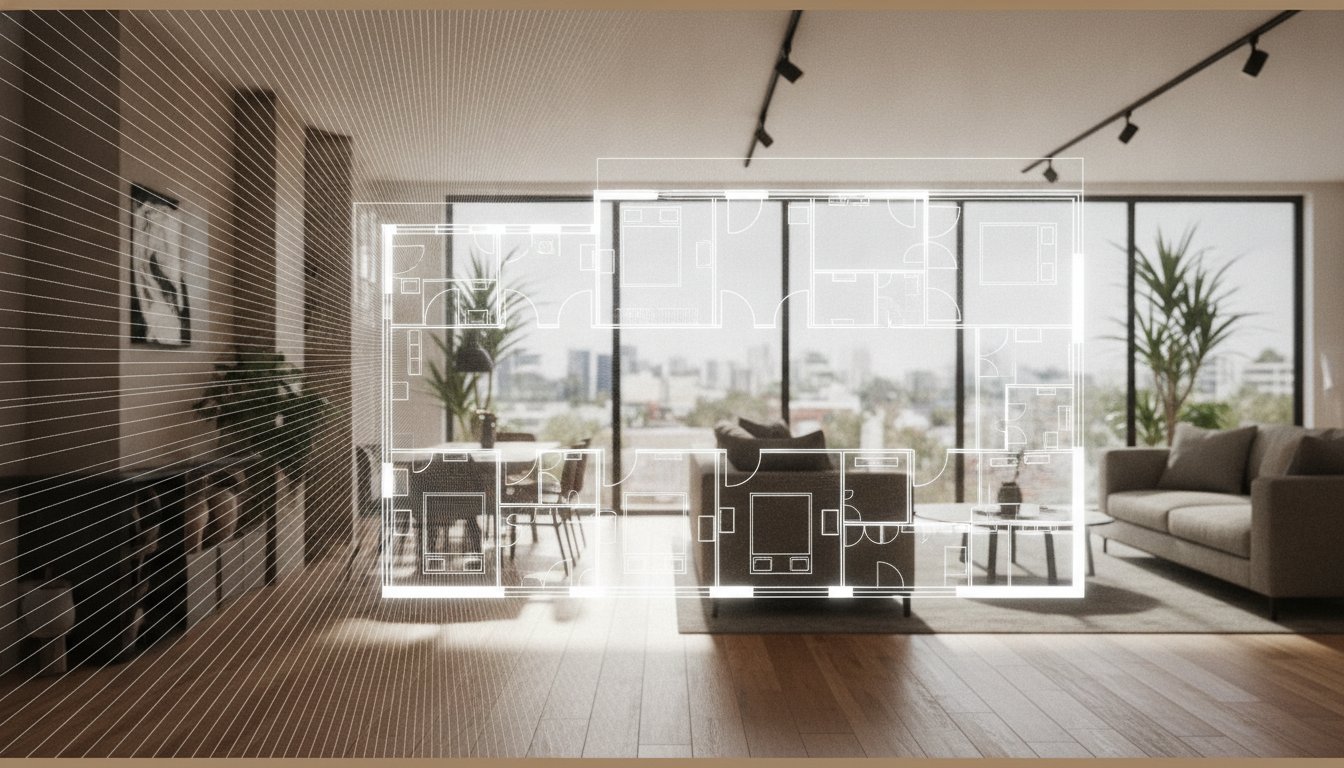
Floor plans must be optimised for resident retention. This means fully furnished private rooms that feel like a retreat, coupled with communal kitchens and social zones that foster interaction. Recent global co-living market analysis indicates that projects with high growth often succeed because they prioritise these human-centric design elements. Sustainable features like solar arrays and smart metering aren't just extras. They future-proof the asset and lower operational costs for the long term.
Securing Approvals: The Consultant Advantage
Navigating the regulatory landscape requires an expert guide. Local councils often have varying interpretations of the Housing SEPP, making the approval process a potential minefield. We manage the complexities of the subdivision process to ensure you're getting the absolute maximum out of a single residential block. This strategic approach is similar to how we manage dual occupancy homes, where land value is unlocked through clever planning and compliance management. If you want to optimise your property portfolio, starting with a feasibility study is the smartest first step to ensure your site is viable.
Consultancy vs. Volume Builder Packages: Minimising Investor Risk
Choosing an "off-the-shelf" design from a volume builder is often the quickest way to compromise your ROI. These cookie-cutter packages are designed for the builder's efficiency, not your site's potential. Every block has unique constraints and opportunities that a generic plan simply cannot address. A strategic coliving development requires a bespoke approach where the design is dictated by the land and local market demand. By opting for independent consultancy, you maintain control over the specification and ensure the final product is a premium asset rather than a compromised residential hybrid.
Transparency is the antidote to hidden costs. Volume builder contracts often hide "variation creep" in the fine print, leading to budget blowouts during the construction phase. Our consultancy model prioritises fee transparency from the outset, providing a clear breakdown of the development lifecycle. This allows you to plan your strategic exit with confidence. Whether you intend to hold for long-term cash flow or execute an immediate sale, a professionally managed build ensures the asset is positioned for maximum market value.
The Builder Appointment Process
Vetting builders for a specialised coliving development is vastly different from hiring a standard residential contractor. You need a partner who understands the high-density requirements and the nuances of multi-tenancy builds. We manage the builder appointment by running a competitive tender process to ensure your brief is met without compromise. A multi-tender process is superior to a single-builder contract because it creates competitive tension that drives down costs while forcing builders to prove their specific expertise in high-density residential projects.
Professional Project Management
The role of a consultant is to act as your single point of truth. We handle the heavy lifting, from managing demolition and site preparation to navigating environmental delays that often catch inexperienced owners off guard. Our focus is on the finish line. We ensure the final handover results in a "ready-to-occupy" asset, allowing you to start generating high-yield cash flow the moment the keys are turned. This meticulous management minimises risk and ensures your capital is working as hard as possible from day one.
Future-Proof Your Portfolio with Strategic Density
Yield is a design choice, not a market accident. By shifting from low-growth traditional rentals to a strategic coliving development, you're engineering a portfolio for superior performance. We've detailed how density drives ROI and why custom consultancy is the only way to bypass the inherent risks of volume builder packages. Success in 2026 requires more than just land; it demands specialised expertise in Australian residential density regulations and a commitment to total transparency.
You don't have to navigate this complex lifecycle alone. We provide end-to-end project management that covers everything from initial design to final handover, ensuring your asset is ready to generate cash flow immediately. By utilising independent builder appointment, we eliminate hidden costs and keep you in control of your investment's destiny. Optimise your property yield with a Dual Living consultancy session and secure your competitive advantage. High-performance property investment is within reach when you have the right strategic partner by your side.
Frequently Asked Questions
What is the minimum land size required for a coliving development?
Minimum land size varies by local council, but a viable site typically starts between 450 and 600 square metres. It is not just about the total footprint; it is about meeting specific Housing SEPP requirements for communal space, setbacks, and landscaping. We assess your block's dimensions to ensure the 10 per cent floor space ratio bonus is actually achievable within your local planning constraints.
How does coliving yield compare to a standard duplex or dual occupancy?
Coliving yields are significantly higher because you are renting by the room rather than by the dwelling. While a standard duplex or dual occupancy might deliver a gross yield of 4 to 5 per cent, a well-executed coliving development can push returns toward 15 per cent. You are essentially trading the single-family rental model for a high-density cash flow engine that maximises every square metre of your land.
Do I need a special manager for a coliving property once it is built?
Yes, specialised management is critical for maintaining high occupancy and resident satisfaction. Unlike a standard rental, coliving involves managing multiple individual leases and shared facilities. We recommend using managers who specialise in the coliving development sector to handle specific operational demands, such as community building and utility management, which standard residential agents aren't equipped to handle.
What are the main differences between coliving and a traditional boarding house?
The main differences lie in the target demographic and the management model. Traditional boarding houses often focus on social or affordable housing managed by Community Housing Providers. In contrast, market-rate coliving is a premium product designed for young professionals and key workers. It prioritises high-end finishes, communal amenities, and a lifestyle-driven resident experience that commands a significant rent premium.