Why would you build two houses if you can only sell one? Many Australian landowners dive into a knockdown-and-rebuild project thinking they've secured their financial future, only to realise they're stuck with a single title and limited exit options. Understanding the nuances of dual occupancy vs subdivision isn't just about semantics; it's the difference between a high-yield investment and a costly missed opportunity. The 2026 property market demands a sharper strategy, especially with the 2027 Capital Gains Tax changes on the horizon.
It's natural to feel confused by the overlap between physical building types and legal land titles. You want to unlock your land's potential without over-capitalising or getting caught in council red tape. Discover the critical differences between physical development and legal title separation to maximise your property’s financial potential. This article provides a clear roadmap for handling planning applications and title offices, giving you the confidence to start your project with a calculated, results-oriented approach.
Key Takeaways
- Distinguish between the physical development of two dwellings and the legal separation of land titles to avoid common ownership traps and title confusion.
- Align your project with a clear exit strategy by comparing the high rental yields of a single-title hold against the immediate capital growth of a subdivided sale.
- Master the complexities of dual occupancy vs subdivision to ensure your development meets both local council regulations and your long-term financial objectives.
- Identify essential site feasibility markers, from zoning overlays to minimum frontage requirements, that determine your land’s true development potential.
- Streamline your project timeline by integrating strategic design with town planning requirements to navigate "red tape" with professional confidence and efficiency.
Dual Occupancy vs Subdivision: Defining the Core Difference
Many landowners treat these terms as interchangeable. They aren't. While they often go hand-in-hand, they represent two entirely different stages of property development. A dual occupancy project focuses on the physical structure; it's the act of building two dwellings on a single piece of land. Subdivision, however, is a legal manoeuvre. It's the process of splitting one land title into two or more separate entities. Understanding this distinction is the essential first step in an optimised knockdown rebuild process.
Can you build first and subdivide later? Absolutely. In fact, synchronising these two processes is often the most efficient path to profit. While some industry commentary focuses solely on the rules for one or the other, the real value lies in knowing how they interact. A dual occupancy provides the rental engine; the subdivision provides the capital payout. When weighing up dual occupancy vs subdivision, remember that one provides the "bricks and mortar" while the other provides the "paper wealth."
Dual Occupancy: The Physical Asset
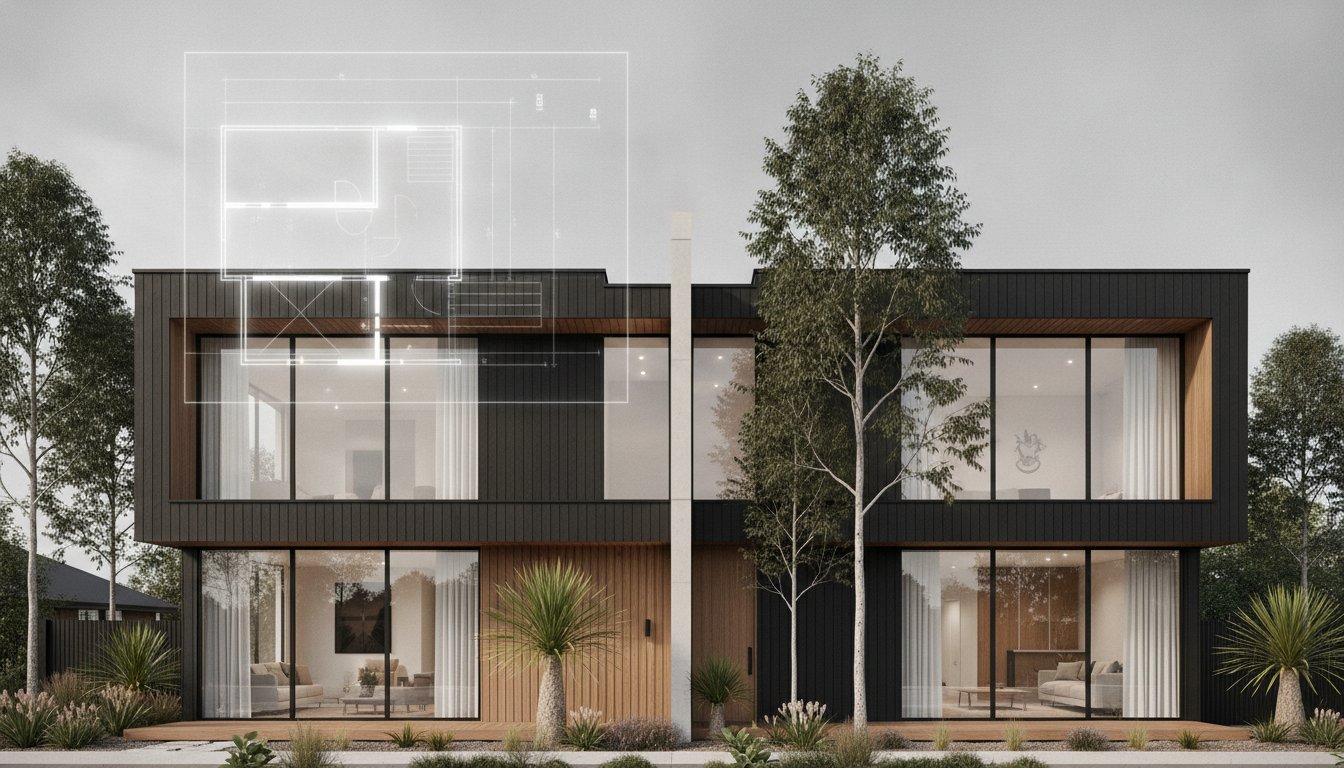
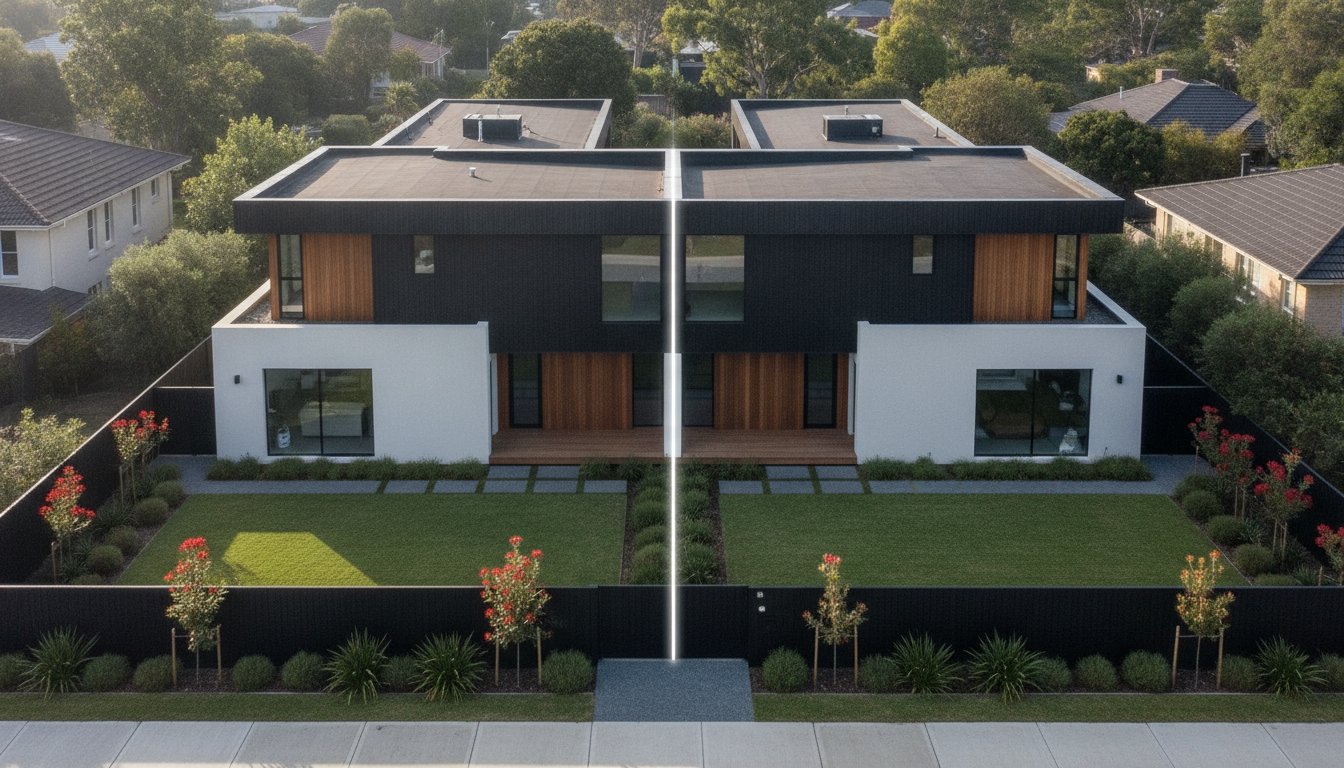
A dual occupancy typically appears as a duplex (two homes sharing a common wall) or two detached houses on one lot. These developments often sit on a single Torrens Title. This setup is perfect for multi-generational families wanting to stay close or investors looking to hold a high-yield asset in a single portfolio. It's a physical solution to land density that doesn't necessarily require a change in ownership structure.
Subdivision: The Legal Title Separation
The Subdivision of land creates a new legal boundary. This allows you to sell one dwelling while retaining the other, or sell both to different buyers. It's a powerful exit strategy, but it triggers specific requirements. In the context of dual occupancy vs subdivision, the latter requires separate utility connections to ensure each lot is independent. This includes:
- Individual water meters and sewer points.
- Dedicated gas and electricity connections.
- Clearly defined legal boundaries and access points.
Subdivision unlocks capital growth by creating two distinct, sellable assets. Without it, you own a large house with a second unit; with it, you own two separate properties.
Strategic Comparison: Choosing the Right Path for Your ROI
What is your end game? This is the fundamental question that dictates the dual occupancy vs subdivision debate. If you're building to hold for long-term yield, a dual occupancy on a single title might be your play. If you're building to sell or unlock massive equity, subdivision is the only logical path. Strategic planning on how to develop dual occupancy ensures your design doesn't accidentally lock you out of future title separation.
The Australian tax landscape is shifting. With the 30% minimum tax rate on capital gains and changes to negative gearing effective July 1, 2027, your timing matters. Investors in new residential properties will soon face a choice between the traditional 50% CGT discount or a new indexation method. These regulatory shifts make the "build to hold" versus "build to sell" decision more than just a preference; it's a high-stakes tax strategy. Your choice today determines your liability tomorrow.
The Case for Dual Occupancy Without Subdivision
Keeping everything on one title has its perks. You'll avoid the immediate sting of subdivision costs, which typically range between $15,000 and $30,000 in professional fees and government charges in cities like Melbourne. It's often a simpler planning route. Some local councils offer a "secondary dwelling" pathway that bypasses the more rigorous standards required for full subdivisions. From a cash flow perspective, you collect two rental incomes while managing a single land tax bill. This can be significantly cheaper in states where land tax thresholds are applied per ownership entity rather than per dwelling, keeping you under higher tax brackets for longer.
Unlocking Equity: Why Subdivision is the Ultimate Value Play
Subdivision is where the real wealth is created. Two separate titles are almost always worth more than two houses on a single title. It's a simple matter of marketability; a single-title duplex can only be sold to an investor, whereas subdivided lots appeal to both investors and owner-occupiers. This creates a broader buyer pool and higher valuations. It's also a powerful risk mitigation tool. You can sell one half of the development to pay down the construction debt on the other. Banks also prefer this. They often view subdivided lots as superior collateral for a dual occupancy investment, giving you more leverage for your next project. If you're ready to see if your land qualifies, our team can help you navigate the town planning applications required to kickstart the process.

Navigating the Integrated Development Process
The most successful projects don't treat building and titling as separate ventures. They treat them as a unified sequence. Viewing dual occupancy vs subdivision as a chronological progression rather than a "this or that" choice is the key to efficiency. Your development should follow a four-phase execution model to ensure no capital is left on the table.
- Phase 1: Site Feasibility. Start by checking zoning and overlays. In New South Wales, recent reforms permit dual occupancies in most R2 zones, while Victoria's General Residential Zone typically requires at least 300 square metres per lot for subdivision.
- Phase 2: Strategic Design. Efficiency begins on the drawing board. Utilising dual living house designs that already account for subdivision setbacks and access requirements prevents expensive redesigns later.
- Phase 3: Town Planning. This is the permit stage. You need approval for both the physical construction and the legal split. Navigating this simultaneously saves months of waiting.
- Phase 4: Construction and Certification. During the build, your contractor must satisfy all subdivision conditions, from drainage to utility points, to receive final sign-off.
Synchronising Design and Title Strategy
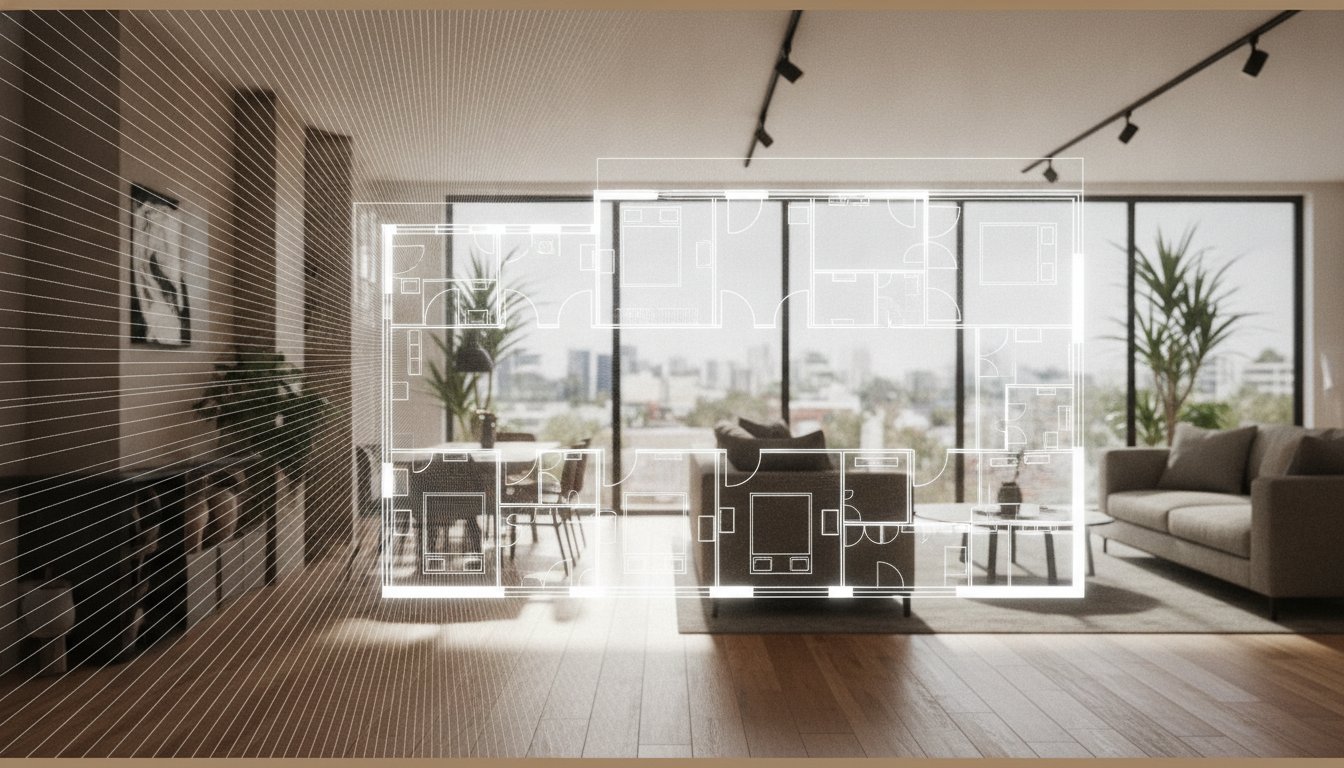
Your floor plan is more than just a layout; it's a legal document. To subdivide later, your design must include fire-rated walls and independent access points from day one. National Construction Code 2025 standards now demand increased energy performance and better condensation management, which must be integrated into your initial architectural phase. A "Plan of Subdivision" should be drafted alongside your building plans to ensure every millimetre of land is utilised. Retrofitting subdivision requirements after the build is finished is a strategic failure that usually results in five-figure costs for structural alterations and service relocations.
Managing the Town Planning and Certification Hurdles
The "Statement of Compliance" is the holy grail of this process. It's the document issued by the council confirming all planning permit conditions have been met. Without it, you cannot lodge at the Titles Office. A specialist can manage your town planning application to ensure every requirement, from SA Water augmentation charges to Victorian VicSmart pathways, is addressed accurately. Once the Statement of Compliance is in hand, your surveyor can lodge the final paperwork. This is the moment your single property officially becomes two legal identities, ready for individual sale or refinancing.
Maximising Your Land’s Strategic Value
Success in the 2026 property market isn't about luck. It's about precision. You now understand that the dual occupancy vs subdivision debate isn't a choice between two separate products; it's a sequence of strategic moves. By synchronising your physical build with a clear title separation strategy, you transform a standard residential block into a high-performance financial vehicle. Whether you're targeting long-term rental yield or immediate capital uplift, your floor plan must support your final exit strategy from the very first sketch.
Don't leave your ROI to chance or get bogged down in council red tape. We provide end-to-end development management and expert town planning navigation to ensure your project stays on track. With a proven high-yield design portfolio, we help you navigate the complexities of the National Construction Code and state-specific planning reforms. It's time to stop guessing and start building with confidence.
Optimise your property potential with a Dual Living strategic consultation. Your path to property wealth starts with a single, calculated decision.
Frequently Asked Questions
Can I subdivide my property after the dual occupancy is already built?
You can subdivide after construction, provided the initial design meets all legal requirements for title separation. This includes separate utility connections and fire-rated walls. Retrofitting these features later is incredibly expensive and often requires structural changes. Smart developers ensure their dual occupancy vs subdivision strategy is integrated from the start to avoid these pitfalls. Planning for subdivision during the design phase ensures a smooth transition when you're ready to create a new title.
What is the minimum land size required for a dual occupancy vs a subdivision?
Requirements vary significantly by state and local council zoning. In New South Wales, dual occupancies generally require 600sqm to 700sqm, though some areas near transport hubs allow as little as 450sqm. In Melbourne's General Residential Zone, a two-lot subdivision usually needs each new lot to be at least 300sqm. Always check your specific local planning scheme, as frontage width and overlays also dictate whether your land is viable for development.
Is a duplex the same thing as a dual occupancy?
A duplex is a specific style of dual occupancy where two dwellings share a common central wall. While all duplexes are dual occupancies, not all dual occupancies are duplexes. You might choose a detached layout with two separate houses on one lot instead. The distinction matters for your dual occupancy vs subdivision strategy, as attached dwellings have different fire safety and service connection requirements compared to standalone houses on separate titles.
How much does it typically cost to subdivide a dual occupancy in Australia?
Professional fees and government charges for a straightforward two-lot subdivision typically range between $15,000 and $30,000 in major cities like Melbourne. This includes land registry fees, surveyor costs, and council permit applications. In Queensland, you should budget for council application fees and planning reports starting around $7,000. These figures exclude actual construction costs and focus purely on the legal and administrative process of creating the new legal land title.